Category: info fixed matches

Football Match Analysis Factors Professionals Always Consider

Analyzing football matches requires more than passion or basic knowledge of the game. Moreover, while many fans believe they understand match dynamics, professionals know that incorrect assumptions often lead to flawed conclusions. In fact, even small analytical mistakes can significantly distort how a match is interpreted. Therefore, understanding football match analysis factors is essential for anyone who wants to evaluate games objectively and professionally.

This article highlights the most common mistakes people make when analyzing football matches and explains how to avoid them. As a result, recognizing these errors helps develop a more accurate and professional approach to football matches analysis.
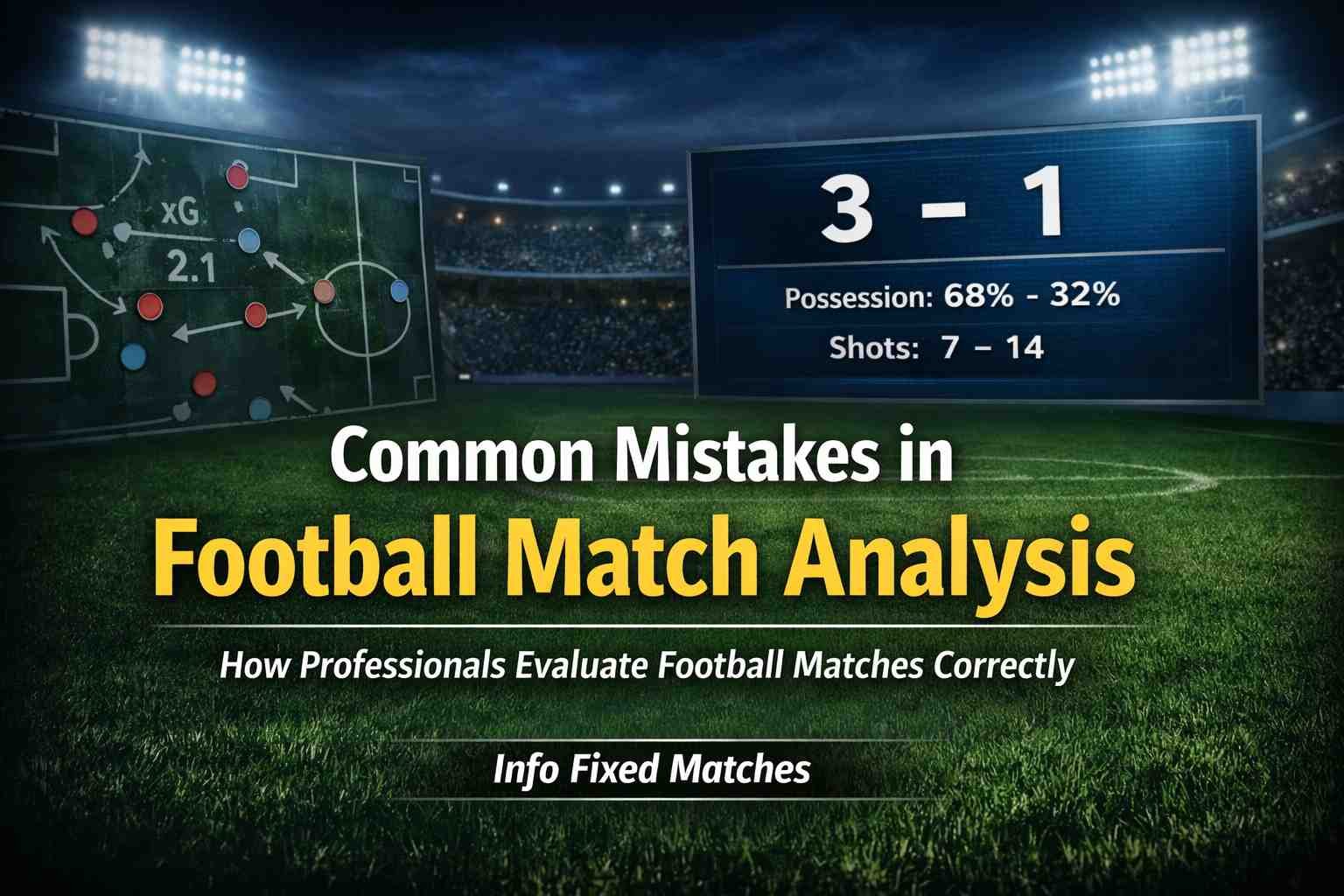
football match analysis factors

Relying Too Much on Final Scores in Football Match Analysis

One of the most frequent mistakes in football match analysis is judging a game solely by its final score. However, while results matter, they rarely tell the full story.

A team can lose despite dominating possession, creating better chances, or controlling the tempo. Likewise, a team may win despite being second-best for most of the match.

Professional analysts always look beyond the scoreline and focus on performance indicators such as chance quality, tactical execution, and overall game control. Consequently, results without context often mislead.

These football match analysis factors help analysts understand why results happen, not just what the final score shows.

Ignoring Match Context When Analyzing Football Matches

Football matches never exist in isolation. For this reason, context plays a vital role in shaping performance, yet many people overlook it entirely.

Important contextual football match analysis factors include:

  • Fixture congestion

  • Travel distance

  • Weather conditions

  • Motivation levels

  • Squad rotation

For example, a team playing its third match in seven days may show reduced intensity. Similarly, a team already safe from relegation may approach matches differently than one fighting for survival.

Ignoring context leads to shallow and unreliable football match analysis.

Key Football Match Analysis Factors Professionals Use

For a deeper understanding of professional football analysis, readers can also explore our detailed guide on how to analyze football matches properly, which explains advanced methods used by experienced analysts.

Possession is one of the most misunderstood football statistics. On the surface, many assume that higher possession automatically means superiority, which is often incorrect.

Possession Quality in Professional Fixed Matches Analysis

Professional analysts distinguish between:

  • Purposeful possession that creates chances

  • Passive possession that lacks penetration

Some teams intentionally allow possession to exploit space on the counterattack. In such cases, lower possession may actually reflect a successful tactical approach.

Statistical Metrics Used in Football Match Analysis

Analysts frequently rely on advanced metrics such as expected goals (xG) when applying football match analysis factors, as explained on Wikipedia.

Drawing Conclusions from One Match Is a Costly Mistake

Short-term thinking is another major analytical error. Because football is a low-scoring sport, variance plays a significant role in match outcomes.

A single match can be affected by:

  • Red cards

  • Penalties

  • Individual errors

  • Refereeing decisions

Therefore, professionals avoid reacting emotionally to isolated games. Instead, they analyze patterns across multiple matches, which provides a far more reliable assessment of performance.

Misinterpreting Football Statistics During Match Analysis

Statistics are powerful tools, but only when interpreted correctly. Unfortunately, many people misuse data by focusing on raw numbers without understanding their context.

Common statistical mistakes include:

  • Valuing shot quantity over shot quality

  • Treating all leagues statistically the same

  • Ignoring opponent strength

For instance, ten low-quality shots from distance rarely equal three clear chances inside the box. As a result, professionals always evaluate statistics alongside tactical and situational factors.

Ignoring Tactical Matchups in Football Analysis

Tactical compatibility between teams often determines match outcomes. Nevertheless, many analyses ignore how playing styles interact.

For example:

  • High-pressing teams can disrupt slow build-up sides

  • Compact defensive teams can neutralize possession-heavy opponents

  • Wide attacks can exploit narrow defensive structures

Professional football match analysis always considers whether a team’s style naturally counters or complements its opponent.

Focusing Only on Star Players Instead of Team Structure

While star players influence matches, football remains a collective sport. Therefore, overemphasizing individual names often hides deeper structural issues.

Professional analysts examine:

  • Team shape

  • Midfield balance

  • Defensive organization

  • Off-the-ball movement

A team with lesser-known players but strong structure may outperform a squad with bigger names but poor cohesion.

Letting Bias Influence Football Match Analysis

Emotional bias is one of the hardest obstacles to overcome. Naturally, fans often analyze matches through personal preferences, favorite teams, or recent narratives.

Professional analysts reduce bias by:

  • Using objective data

  • Reviewing matches multiple times

  • Comparing performances across similar situations

As a result, removing bias leads to clearer and more consistent evaluations.

Final Thoughts on Avoiding Football Match Analysis Mistakes

Understanding football requires patience, discipline, and critical thinking. In conclusion, the most common mistakes in football match analysis stem from oversimplification, emotional reactions, and ignoring context.

These principles work best when combined with a structured approach to how to analyze football matches properly. Ultimately, avoiding these errors leads to deeper understanding and more professional-level match evaluations.

How Professional Analysts Read Football Statistics (xG, Shots, Possession)

Football statistics play a crucial role in modern match analysis. However, numbers alone do not tell the full story. Professional analysts use statistics as tools to support observation, not replace it. When used correctly, football statistics analysis helps explain performances, reveal hidden trends, and reduce emotional bias.

In this article, you’ll learn how professionals interpret football data such as expected goals (xG), shots, and possession, and how these metrics fit into a broader analytical framework. Understanding this process will help you read matches more accurately and avoid common analytical mistakes.

Football Statistics Analysis

Why Football Statistics Analysis Matters in Match Evaluation

Statistics help transform subjective opinions into objective insights. While the “eye test” remains important, football match statistics provide measurable evidence of what actually happened on the pitch.

Professionals rely on data to:

  • Validate or challenge visual impressions

  • Identify patterns across multiple matches

  • Separate short-term variance from long-term performance

However, experienced analysts never rely on a single number. Instead, they combine multiple indicators to build a reliable interpretation of a team’s performance.

Expected Goals (xG): What It Really Tells You

Expected goals (xG) is one of the most widely used metrics in modern football analysis. It estimates the probability of a shot resulting in a goal based on factors such as distance, angle, body part used, and defensive pressure.

The concept of expected goals (xG) is widely explained in football analytics, including its methodology and limitations.

Why xG Is Valuable

  • It measures chance quality, not just outcomes

  • It helps explain whether results were deserved

  • It smooths out luck and finishing variance

For example, a team may lose 1–0 but record a higher xG than their opponent. Over time, this often indicates a stronger underlying performance than the result suggests.

What xG Does Not Tell You

  • Individual finishing skill in isolation

  • Tactical discipline without context

  • Defensive structure on its own

xG is powerful, but only when interpreted alongside other metrics and match context.

Shots, Shot Quality, and Shot Locations

Shot data is often misunderstood. Many people focus on total shots, but professionals look deeper.

Key Factors Analysts Consider

  • Shots on target vs total shots

  • Shot location (central vs wide areas)

  • Shot quality (clear chances vs speculative attempts)

A team taking 15 low-quality shots from distance may pose less threat than a team creating 5 high-quality chances inside the box. Therefore, shot quality always matters more than volume.

Possession: When It Matters (and When It Doesn’t)

Possession is one of the most misleading football statistics if taken at face value. High possession does not automatically mean control or dominance.

Analysts Ask:

  • Is possession progressive or passive?

  • Does it lead to chances?

  • Is the team controlling space or just recycling the ball?

Some teams deliberately concede possession to exploit counterattacking opportunities. In such cases, low possession may actually reflect a successful tactical approach.

Context determines whether possession is meaningful or irrelevant.

How Football Statistics Fit Into Complete Match Analysis

Football statistics analysis works best when combined with tactical understanding, squad context, and motivation. Numbers explain what happened, but not always why it happened.

To get the full picture, analysts integrate data into a broader framework that explains performance in a structured way. This approach aligns closely with professional methods used to how to analyze football matches properly, ensuring statistics support conclusions rather than distort them.

Common Mistakes When Interpreting Football Statistics

Even experienced fans make errors when reading football data. Professionals avoid these common pitfalls:

  • Overreacting to one match

  • Ignoring opposition strength

  • Treating all leagues the same statistically

  • Focusing on trends without context

Statistics are most valuable over larger sample sizes. One match rarely defines true performance.

Final Thoughts on Reading Football Statistics Like a Professional

Football statistics are essential tools, but they are not shortcuts. Professional analysts use data patiently, responsibly, and within context. Metrics like xG, shots, and possession help explain patterns, not predict outcomes in isolation.

By combining statistical indicators with tactical insight and long-term trends, you gain a clearer understanding of performance and make more reliable evaluations over time.

How to Analyze Football Matches Like a Professional

Learning how to analyze football matches correctly is one of the most important skills for anyone who wants to understand the game on a deeper level. While many fans rely on intuition or recent results, professional analysts follow a structured approach. They evaluate data, tactics, and context before forming conclusions.

In this guide, you’ll learn how to analyze football matches step by step, using the same principles professionals apply. More importantly, you’ll understand why each factor matters and how they work together.
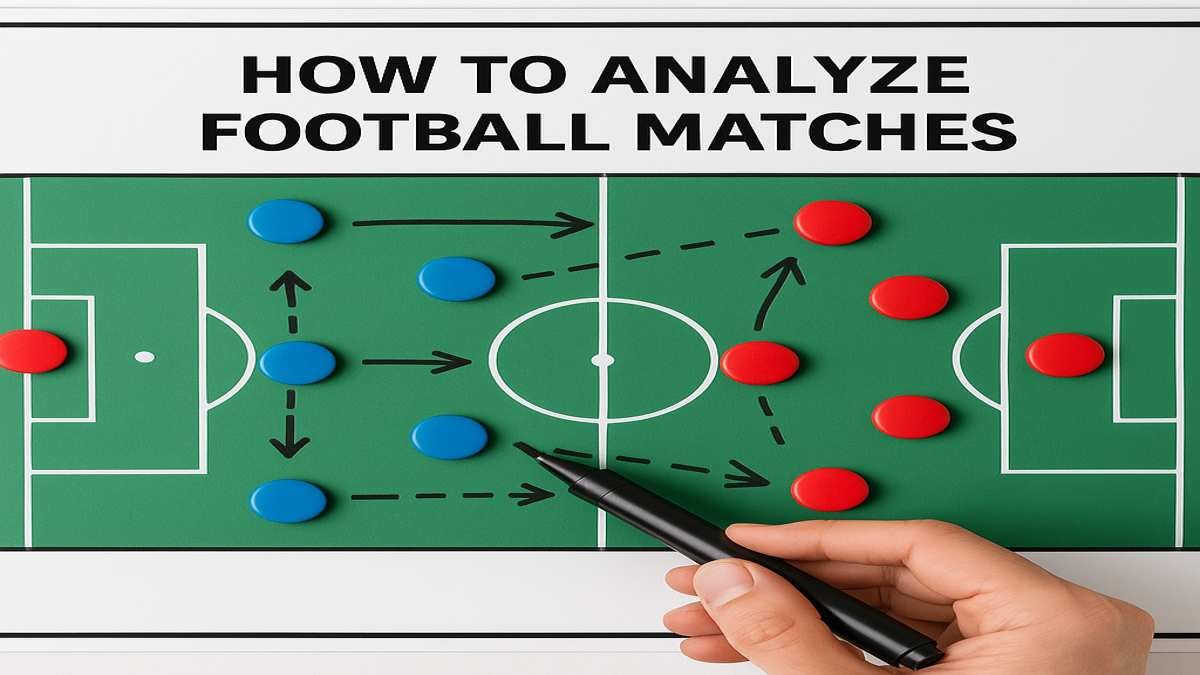
how to analyze football matches

Understanding How to Analyze Football Matches

Football is a dynamic sport. As a result, outcomes are influenced by far more than just talent or league position. Teams change from week to week due to injuries, motivation, tactical adjustments, and external pressure.

Therefore, proper football match analysis focuses on patterns, not guesses. When analysis is done correctly, it allows you to evaluate performances objectively rather than emotionally, leading to more professional football insights over time.

Team Form and Recent Performances When You Analyze Football Matches

Team form is often the first thing analysts examine. However, it’s important to go beyond simple win–loss records.

Instead of asking “Did they win?”, professionals ask:

  • How did the team perform?
  • Were results consistent with performances?
  • Did the team dominate or struggle?

For example, a team might win two matches but create very few chances. Meanwhile, another team may lose while producing strong attacking numbers. In such cases, the underlying performance is more important than the result itself.

What to Look For

  • Goals scored vs chances created
  • Defensive stability
  • Performance trends over 5-6 matches

Consistency is a strong indicator of reliability.

Squad Depth, Injuries, and Suspensions When You Analyze Football Matches

Squad availability plays a crucial role in football match analysis. Even the strongest teams can struggle when key players are missing.

Before analyzing a match, professionals always check:

  • Injuries to core players
  • Suspensions, especially in defense or midfield
  • Rotation due to fixture congestion

Moreover, squad depth matters. Some teams replace missing players easily, while others suffer a significant drop in quality.

As a result, two teams with similar league positions may perform very differently depending on availability.

Tactical Matchups and Playing Styles When You Analyze Football Matches

Football matches are often decided by tactical compatibility. Some styles naturally counter others.

For example:

  • High-pressing teams often trouble slow build-up sides
  • Compact defensive teams frustrate possession-based opponents
  • Wide attacks exploit narrow defensive systems

Because of this, analyzing how two systems interact is essential.

Key Tactical Questions

  • Does one team press high or sit deep?
  • Are full-backs heavily involved in attack?
  • How does the team react when conceding first?

Understanding tactics helps explain why certain matchups repeatedly produce similar outcomes.

Motivation and Psychological Factors

Motivation is one of the most underestimated elements in football analysis. However, professionals take it very seriously.

Teams behave differently depending on context. For instance:

  • Title races increase focus and intensity
  • Relegation battles create urgency
  • Local derbies raise emotional stakes

Additionally, motivation often changes late in the season. Teams with nothing to play for may rotate players, while others push beyond their usual limits.

Therefore, analyzing why a team needs a result is just as important as how they play.

Home and Away Performance Trends

Home advantage remains a significant factor in football. While modern travel has reduced its impact, many teams still perform better in familiar environments.

Professionals compare:

  • Home vs away results
  • Goal difference by venue
  • Tactical adjustments when traveling

Some teams rely heavily on crowd energy, while others are comfortable playing away. Recognizing these patterns improves analysis accuracy.

How to Analyze Football Matches Step by Step

To analyze matches consistently, professionals follow a simple sequence: check team news, assess recent performances, review tactical matchups, and confirm insights with statistics. This step-by-step approach helps reduce emotional bias and improves decision-making.

Statistical Indicators That Matter

Statistics help confirm what the eye test suggests. However, not all numbers are equally useful.

Many professional analysts rely on advanced metrics such as expected goals (xG) to evaluate performance more accurately, as explained on Wikipedia.

Key Metrics Professionals Use

  • Expected goals (xG)
  • Shots on target
  • Shot quality
  • Possession with purpose
  • Defensive actions per match

Rather than focusing on one metric, analysts combine several indicators to build a complete picture.

For example, consistent xG superiority often predicts future success better than short-term results.

Game Context and Scheduling Factors

Context shapes performance. Therefore, professionals always consider external factors such as:

  • Fixture congestion
  • Travel distance
  • Weather conditions
  • Previous head-to-head patterns

A team playing its third match in seven days may struggle physically. Likewise, extreme weather can slow down technical sides.

Ignoring context leads to flawed conclusions.

Why Long-Term Patterns Matter More Than One Match

Single matches can be misleading. Red cards, penalties, or refereeing decisions can distort outcomes.

That’s why professionals prioritize long-term trends. When a team consistently shows strength across multiple matches, it becomes a reliable indicator of quality.

In contrast, short-term spikes often correct themselves over time.

Final Thoughts on Professional Football Match Analysis

Learning how to analyze football matches requires discipline and patience. While intuition plays a role, structured evaluation delivers far better results.

By combining:

  • Performance data
  • Tactical understanding
  • Squad analysis
  • Motivation and context

You gain a clearer, more reliable view of the game. Over time, this approach transforms how you understand football and interpret match outcomes.